
Dog Seizures — What to Know & What to Do
The post Dog Seizures — What to Know & What to Do by Dr. Catherine Ashe appeared first on Dogster. Copying over entire articles infringes on copyright laws. You may not be aware of it, but all of these articles were assigned, contracted and paid for, so they aren’t considered public domain. However, we appreciate that you like the article and would love it if you continued sharing just the first paragraph of an article, then linking out to the rest of the piece on Dogster.com.
Seizures can be terrifying! Unfortunately, seizure disorders are not uncommon in canines and can occur at any age, starting in puppyhood. Know what a seizure looks like so you can act quickly.
Surprisingly, there are many different types of seizures ranging from full body convulsions (tonic- clonic) to localized seizures to absence spells where a dog merely seems to be “out of it.” The most common and familiar is the tonic-clonic (TC) type.
A typical TC seizure will start with stiffening of the face and limbs followed by rapid muscle contractions. A dog may fall on his side, drool heavily, and lose bowel and bladder control. This can last anywhere from a few seconds to minutes. Once the seizure has ended, a dog does not immediately return to normal. The convulsions may have stopped, but many dogs can be very disoriented, even blind, afterward. Other unusual behavior may include heavy sleeping, ravenous eating or complete anorexia. This can last for up to 24 hours.
What you should do
The first step is to not panic. Then:
- Keep your hands away from your dog’s mouth, as he may inadvertently bite. Your dog will not choke on his tongue, contrary to popular myth.
- Make sure your dog is on a flat surface from which he cannot fall.
- Talk calmly to your pet while monitoring the seizure.
- Once the activity has slowed down or ceased, it’s time for a trip to your veterinarian. If the seizure doesn’t stop after five to eight minutes, you will have to get your dog into the car carefully.
What your vet will do
When you arrive, if the seizure is ongoing, your veterinarian will act quickly. The first step is generally a dose of Valium given intramuscularly or intravenously. This is very effective for stopping seizure activity.
In some cases, prolonged convulsions can cause elevated body temperatures. If this is the case, the veterinarian may treat for heatstroke by cooling your dog and administering fluids. Heatstroke can cause derangements in blood sugar, electrolytes and blood clotting abilities.
If the seizure has ended, your veterinarian will start with a brief physical examination to make sure your dog is stable, then ask questions about possible toxin exposure, such as rat poison, xylitol or mushrooms, as well as any history of seizures. This will be followed by a more thorough physical — weight, vitals and nose-to-tail evaluation.
Initial diagnostics may include blood work, a urinalysis and blood pressure. If those are normal, your veterinarian may take a conservative approach. This could mean monitoring your pup at home for any more seizures. A seizure journal is often recommended. This will include writing down the date and time of seizures, as well as any suspected triggers, and the length of the event. Some dogs will have one seizure and never have another, while others will develop a chronic disorder. There are many possible causes including birth defects, toxins, infectious conditions like canine distemper virus, cancer and epilepsy.
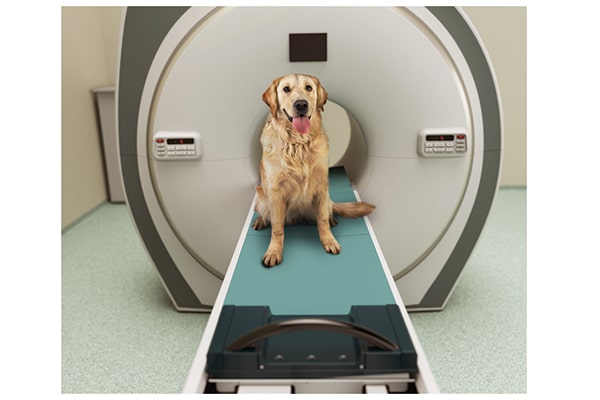
There are many methods to diagnose the causes of seizures including an MRI. Photography by: ©MediaProduction | Getty Images
When other obvious causes such as toxin exposure have been ruled out, causes of seizures can be broken down by age range. In puppies less than 6 months of age, the most likely cause is a congenital problem such as a liver shunt or brain abnormality. From the ages of 6 months to 5 years, epilepsy is the most likely diagnosis. Beyond the ages of 5
and 6 years, unfortunately, many dogs are afflicted with brain tumors.
Determining a diagnosis in the absence of labwork abnormalities or toxins can be very difficult. Extensive testing that includes cerebrospinal (CSF) evaluation (“spinal tap”) and an MRI of the brain is often recommended. Most owners opt not to go this route due to expense but rather try empirical treatment with medications. Recovery and prevention of further seizures depends on the underlying cause. There are several excellent medical options available including phenobarbital, levetiracetam and zonisamide. If your dog develops seizures, your veterinarian will work with you to find the best option for treatment.
About the author:
Catherine Ashe is a veterinarian, mother and freelance writer residing in Asheville, North Carolina. For nine years, she practiced emergency medicine and is now a relief GP. When not working, she spends time with her family of six, reading, writing and enjoying the Blue Ridge mountains.
Learn more about seizures and other health issues at dogster.com:
The post Dog Seizures — What to Know & What to Do by Dr. Catherine Ashe appeared first on Dogster. Copying over entire articles infringes on copyright laws. You may not be aware of it, but all of these articles were assigned, contracted and paid for, so they aren’t considered public domain. However, we appreciate that you like the article and would love it if you continued sharing just the first paragraph of an article, then linking out to the rest of the piece on Dogster.com.
